Have you ever noticed that when listening to truly great music, the audio has a tactile quality? A sense of realness and being. Like if you reach out and try to feel it, your brain thinks it’s going to be there. When all the cards line up right, you feel as if you’re really in the room with a band, sitting near the stage and can feel the vibrations of the bass, the subtle variations in the musicians’ touch, the singers’ voices, all unique as a fingerprint. Great headphones, truly beyond-the-pale, audio-nirvana-producing headphones, make it feel like you’re really there. The qualities of sound reproduction that mimic really being there are called resolution, transparency, and transient response. Explore the ephemeral with us as we give you a crash course.
Let’s go for a drive
Looking at headphones in a broad sense, the sound you hear is produced when a diaphragm is pushed back and forth through the air, creating pressure waves that your brain interprets as sound. When your headphones produce music in the audible range, the diaphragm must change directions and create those pressure waves more than 20,000 times per second!
Think of it like you're in your car, taking hairpin turns as fast as you can. Every single time your car (the diaphragm of the headphones) changes direction, it needs to overcome its own inertia by slowing down before it can go in the other direction. If your diaphragm/car is unable to change directions, it may overshoot or make a wide turn, which in turn will affect how accurately you can steer the bend in the road (i.e. the sound wave being reproduced). A misrepresentation of this sound wave (the bend in the road) changes the perception of sound and results in a loss of accuracy and timing, also called resolution, just like a car would lose traction and have to compensate for its turn. Losing resolution means you will not be able to hear the stop and start of notes clearly, and details will be blurred.
Sir Isaac Newton, or “How I learned to stop worrying and love Inertia”
Newton’s laws of motion have proven to be somewhat troublesome for headphones. The physics governing the diaphragm’s ability to faithfully follow the music signals by accelerating and decelerating is very simple and largely dependent on one thing; its Inertia. Taking a quick trip back to high school (sorry), Inertia is the tendency of an object to remain in a constant state, and to resist any change in speed or direction as was described by Sir Isaac Newton as his first law of motion in Philosophiæ Naturalis Principia Mathematica.
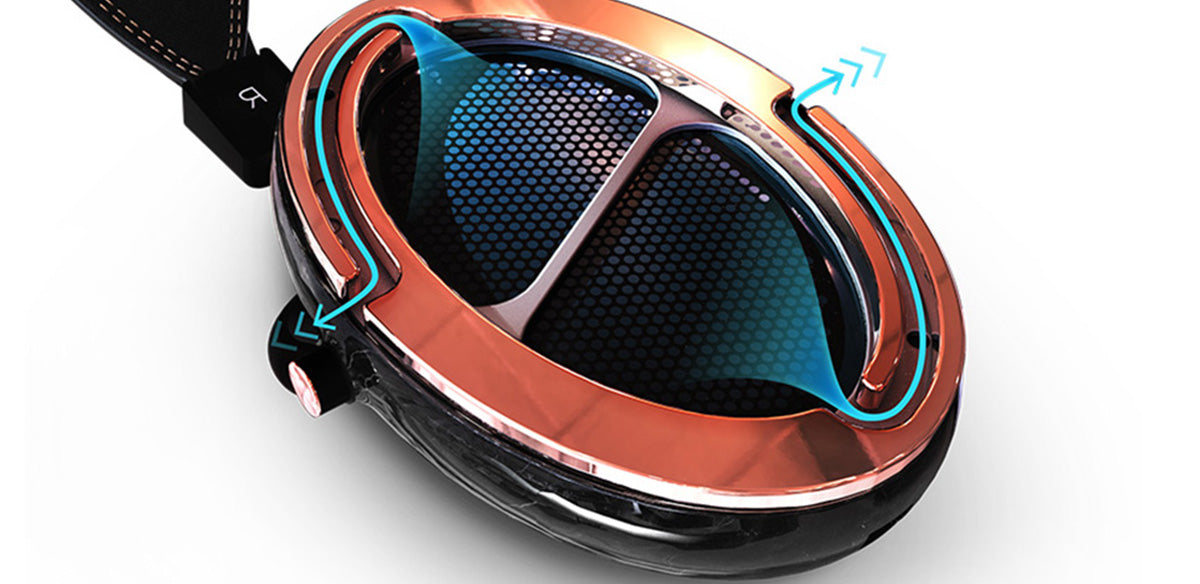
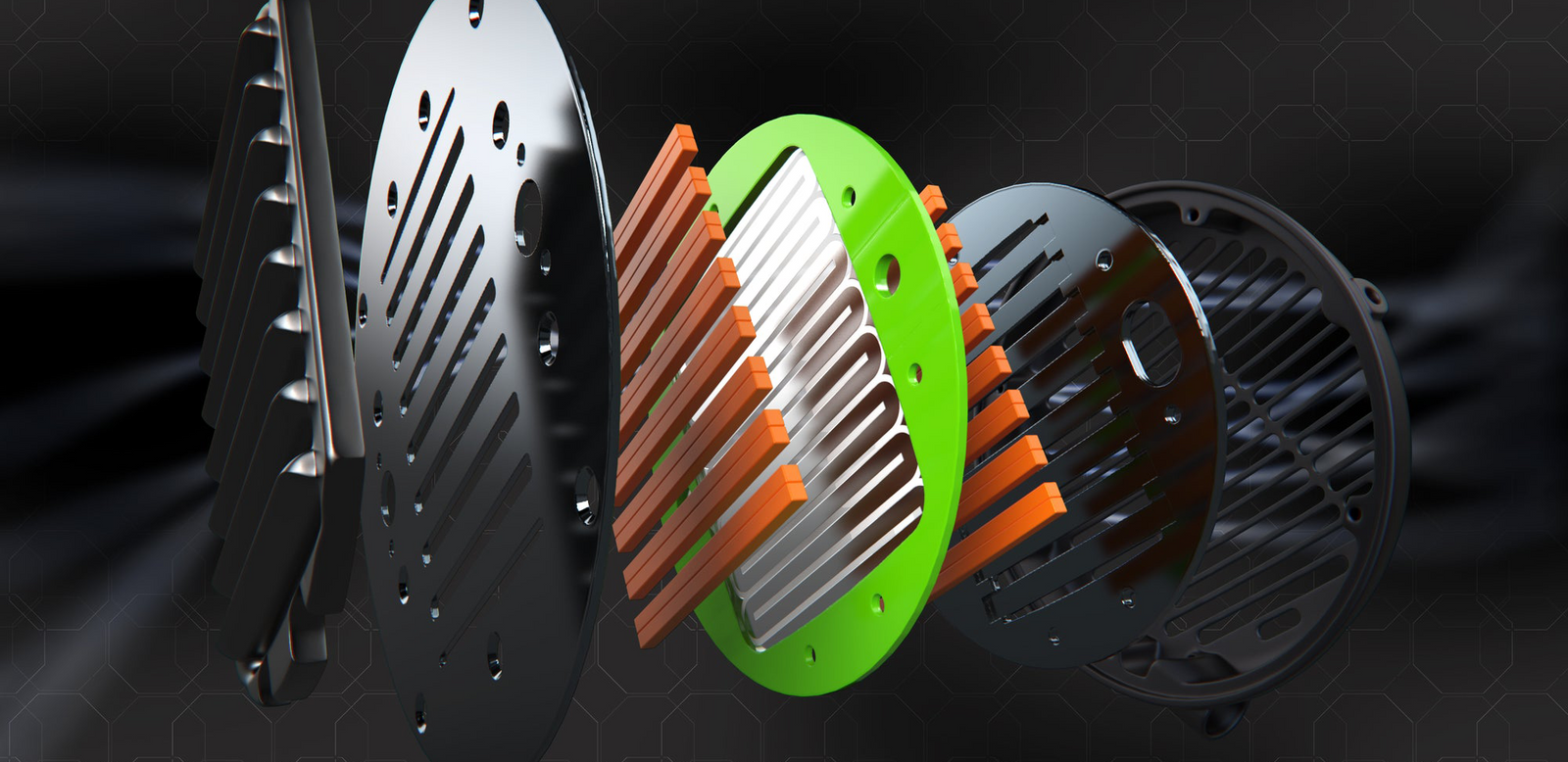
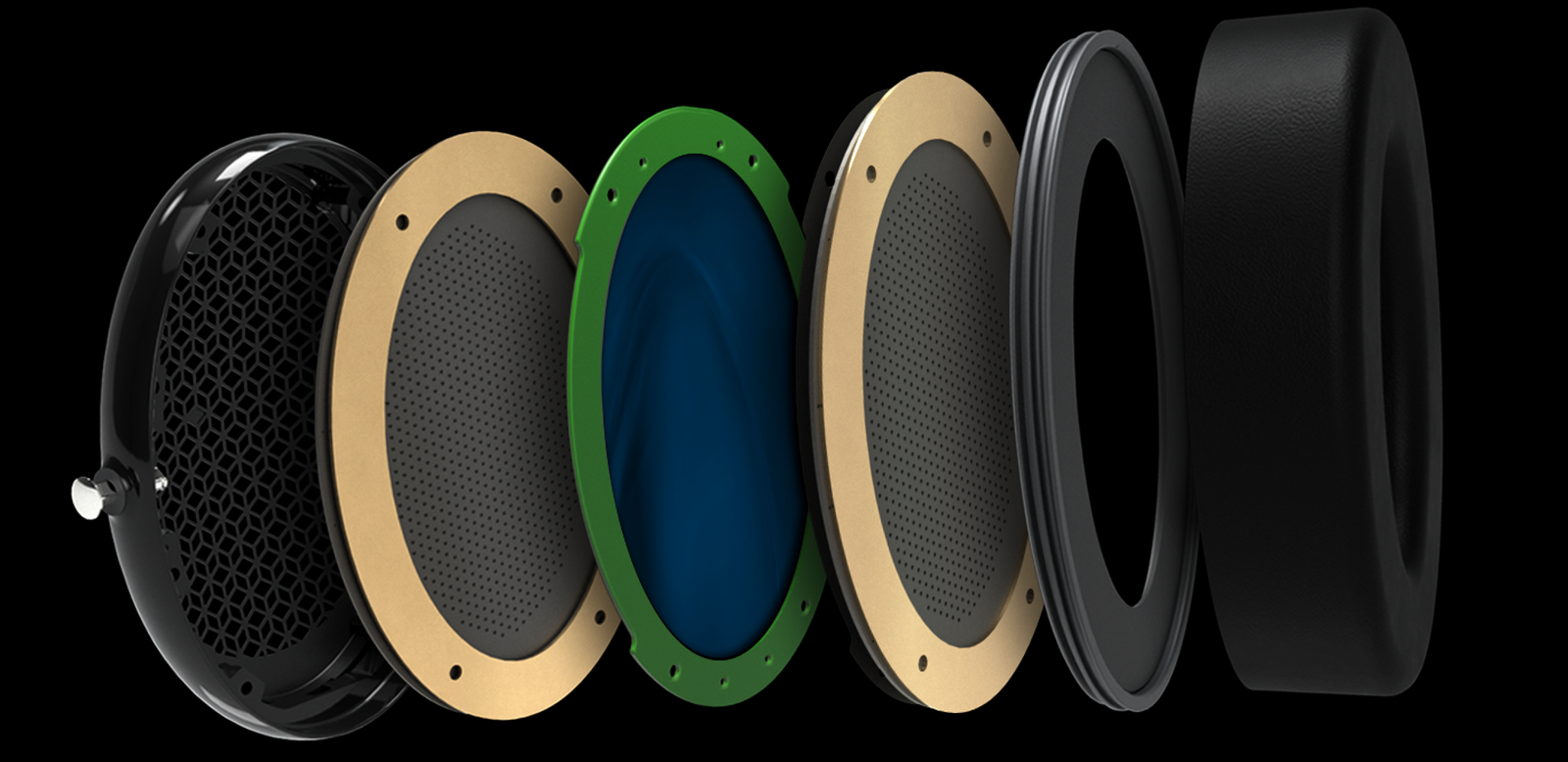
What does inertia have to do with headphones? Well, back to our car analogy, if you’re trying to get to the end of the racetrack as quickly as possible around those turns, would you rather drive a motorcycle or a semi-truck? The more mass the diaphragm of your headphone has, the greater its inertia, which means the harder it is to stop and change directions. If the diaphragm has lower mass, it can have a much higher acceleration for the same amount of force applied. Dynamic drivers (like those found in most headphones on the market) use diaphragms with a mass tens of times greater than the ultra-light and thin membranes used in Audeze’s planar magnetic drivers. Because of all that extra weight, dynamic drivers are utterly incapable of accelerating as fast as the extremely light drivers used in all Audeze headphones.
The measurement of a transducer’s (the assembly of the diaphragm and magnets) ability to vibrate back and forth accurately is called its transient response. A transient is an abrupt change in signal, and is also called an impulse response. If you place a theoretically perfect microphone next to a headphone transducer with theoretically perfect impulse response time, you would be unable to distinguish the difference between the original and recorded impulse. It would appear as if the transducer is “transparent” or non existent, as it does not affect the sound in any way, only faithfully follows the input. Basically saying a source of audio output is transparent means it sounds like there was never a recording in the first place, that you were there in the studio.
Reaching for the impossible
Unfortunately this perfect model is, in reality, impossible to achieve -- blame the laws of physics and that rascal, Isaac Newton. Audeze employs cutting edge tech with our nano-scale diaphragms and Fluxor magnets, all in an effort to reach that impossible goal. In doing so, we deliver the next best thing to perfect. Transient response times that are unlike any you’ll hear on other headphones, truly breathtaking transparency, and astonishing resolution. We are blurring the lines between what is possible with audio and what isn’t, and continue to push the boundaries in an effort to truly live up to our promise of uncompromised audio.
Artists may receive discounted Audeze product in exchange for interviews and opinions. Audeze does not solicit specific outcomes as part of any artist agreement.